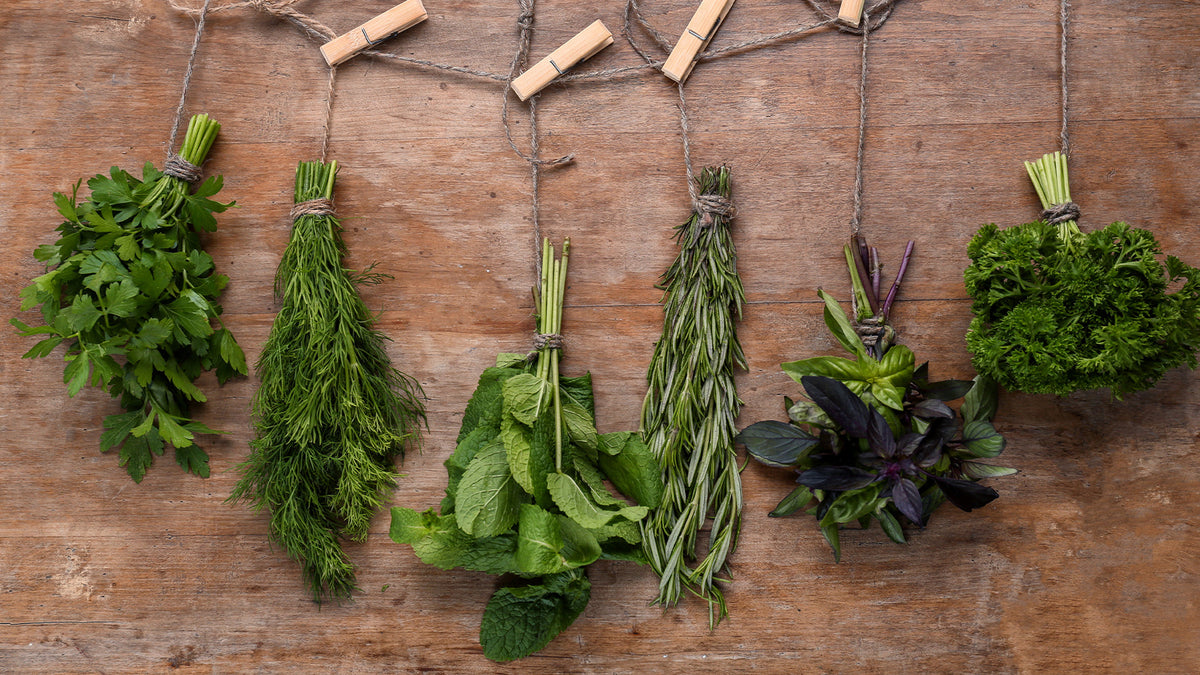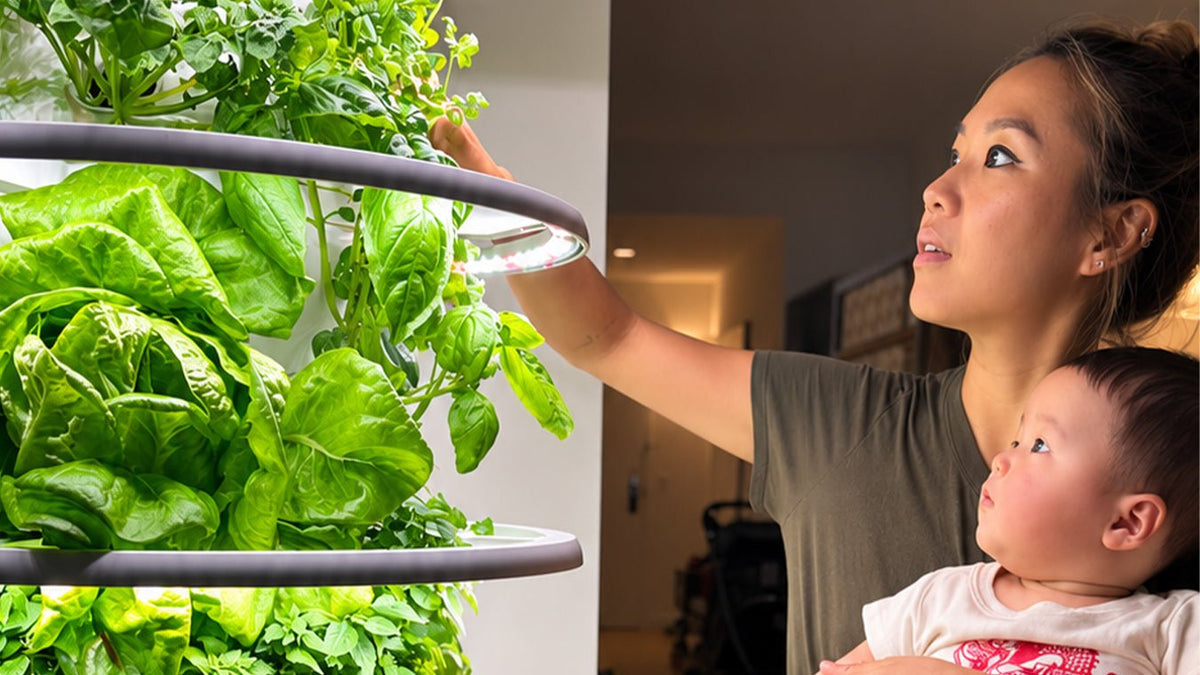

The rule for harvesting tea herbs fits on a seed packet: cut just above a pair of leaves, and never take more than a third of the plant at once. Do that every week or so and each cut becomes two new stems. Your tea habit is the pruning schedule.
That's the best part of growing your own tea. The plants want to be harvested. Skip it and they get tall, leggy and start to flower. Snip a handful for tonight's cup and they come back fuller.
At a glance
-
Where to cut: just above a leaf node, where a pair of leaves meets the stem
-
How much: no more than a third of the plant at a time
-
How often: every 7 to 10 days once plants are established
-
For leaves: harvest before the plant flowers, and pinch off flower buds as they appear
-
For flowers: pick blooms as they open; the more you pick, the more they make
Why cutting above a node works
Every leaf node holds two tiny buds waiting for a signal. When you snip the stem just above them, the plant sends its energy there, and two new stems grow where one used to be. Cut in the middle of a bare stem and you leave a stub that won't regrow. Cut above the node and you double the plant.
The mistake that slows plants down
Most tea herbs don't suffer from too much harvesting. They suffer from uneven harvesting. It's easy to keep going back to the same lemon balm for every cup while the sage sits untouched and gets woody. Rotate through your plants, and give each one a trim even when you aren't brewing with it. Dry the extras (here's how) or use them in the kitchen (five ideas here).
Then decide what each plant is for: leaves, flowers, or both. When holy basil, Thai basil or spearmint start to bloom, they put their energy into flowers and the leaves turn smaller and sharper. If you're growing for leaves, pinch buds off as soon as you see them. If you love the flowers, let a few stems bloom and keep harvesting leaves from the rest. Some blends call for flowers anyway: Nightfall uses dandelion's tender flowering tops, and Petal Glow is built on marigold, calendula and viola blooms.
Plant by plant
Growing on a Counterstand? Each herb below notes whether it grows there or on the Farmstand only.
Holy basil (Tulsi): Snip the top 2 to 3 inches of each stem just above a leaf pair. Holy basil flowers eagerly, so check for buds every time you harvest. Used in Last Light, Nightfall and Fireside. Counterstand-friendly.
Thai basil: Same as holy basil: tip-prune often and pinch flowers early. Used in Fireside and After Supper. Counterstand-friendly.
Lemon balm: One of the most forgiving herbs you can grow. Cut whole stems back by a third and it fills in quickly. Used in Last Light, Nightfall, First Light and Moonrise. Counterstand-friendly.
Spearmint: Vigorous and happy to be cut. Snip stems above a node, and harvest often to keep it from crowding its neighbors. Used in Last Light, First Light, Deep Breath and After Supper. Counterstand-friendly.
Sage: Slower growing, so take sprig tips and individual leaves rather than whole stems. Leave plenty of foliage behind. Used in First Light, Deep Breath and Cold Snap. Farmstand only.
Thyme and orange thyme: Cut into soft green growth, never into the woody base. Thyme regrows from green stems, not old wood. Snip the top third of each sprig. Orange thyme is used in Fireside and Cold Snap; thyme in Deep Breath. Both are Counterstand-friendly.
Oregano: Cut stems back by a third just above a leaf pair. It bounces back fast. Used in Cold Snap. Counterstand-friendly.
Fennel: Harvest the outer fronds first and let the center keep growing. Used in After Supper and Moonrise. Farmstand only.
Dandelion. Pick the outer leaves at the base and leave the center rosette to keep producing. Used in Nightfall and Wild Greens. Counterstand-friendly.
Stevia. Snip stem tips above a leaf pair to keep it bushy. A few leaves go a long way. Used in Wild Greens. Farmstand only.
Marigold. Grown for its flowers, so pick blooms as soon as they open. Regular picking keeps new buds coming. Used in Petal Glow. Counterstand-friendly.
Calendula, viola and nasturtium. Same approach as marigold: pick flowers as they open to keep new ones coming. Nasturtium leaves are fair game too. Used in Petal Glow, Moonrise and Wild Greens. Farmstand only.
A simple routine
Pick a night each week to make tea and trim at the same time. Snip what tonight's blend needs, give every other tea plant a light trim, and set the extras aside to dry. Ten minutes, and your plants are better for it.
As our Nightfall recipe puts it: harvesting the blend doubles as plant maintenance.
Featured seedlings: Holy Basil (Tulsi), Lemon Balm, Spearmint, Orange Thyme, Sage