A conversation with cookbook author and recipe developer Hetal Vasavada (@milkandcardamom)
"As the tomatoes were getting ripe, I would wash them, let them dry in the sun, and put them in a freezer bag. At the end of the season, I had all these pounds of tomatoes that I could process. I got two and a half jars of marinara and seven jars of salsa."
For Hetal, growing food isn't a trend; it's an inheritance. Both of her parents grew up farming in India, and when finding the produce they loved proved nearly impossible in 1980s New Jersey, her family filled in their backyard pool with dirt and grew it themselves. Decades later, that same instinct lives on a stone patio in the Bay Area, where Hetal coaxes chickpeas, garlic, cantaloupe, and heirloom South Asian tomato varieties out of her Farmstand, then turns the harvests into jars of salsa, dried herbs, and recipes her community can't get enough of.
You may already know her work. A former contestant on Season 6 of MasterChef, Hetal built a devoted following around Indian-inspired sweets, playful fusion recipes, and getting people excited to cook for the ones they love. Her cookbook, Milk and Cardamom, was named one of the best cookbooks of the year by The Washington Post and the San Francisco Chronicle, and her recipes have appeared in The New York Times, Food & Wine, and Bon Appétit. She's also a certified Master Gardener, and one of the most experimental growers we've ever talked to.
1. You come from a real farming family. What did growing food look like for you growing up?
Both of my parents grew up farming in India. My dad's family and my mom's family both own farms, proper acreage, growing mangoes, coriander, sesame seeds, cumin, peanuts, all sorts of things. When they came to America in the 80s, it was really hard to find the produce they'd grown up with. We lived in North Jersey, so it was either an hour and a half to Jackson Heights in Queens or an hour south to Edison. So we started growing it ourselves. We had an inground pool, and we filled it in with dirt and grew rows and rows of Indian eggplants, peppers, and tomatoes. That garden is still there today. My mom called me recently just to show off all the peppers she'd harvested and how she was pickling them.
2. How did the Farmstand come into the picture?
When I first moved to the Bay, I tried to grow things, but I was on the wrong side of the building and got no sun. Then in 2020 I was in a two-bedroom apartment with a stone patio, no dirt, a preschooler, and Bay Area water restrictions, and Lettuce Grow sent me a Farmstand. That started everything. It was easy, it was quick, and it was manageable. I remember growing an ungodly amount of cherry tomatoes and watching my daughter pick them and eat them straight off the plant, which is exactly what I used to do as a kid while my mom yelled at me to wash them first.
3. You've become famous around here for your experiments. What have you grown that surprised you?
This summer I grew chickpeas hydroponically, and it worked. I got about a cup of dried chickpeas per plant and turned them into falafel. I grew garlic. I grew four mini cantaloupes, and I cut off all the extra fruit so each one would get to a decent size. They were so sweet. I saved seeds from heirloom tomatoes and got eight pounds off one plant of an Indian variety and four pounds of San Marzanos off another. I'll throw almost anything into a plug just to see if it grows. Right now I have beans from my bean subscription in there, plus kalonji, which is nigella seed. And I still do about 50/50 experiments and Lettuce Grow seedlings, because your seedlings just work. I know I'm going to have produce.
4. Once the harvests start piling up, how do you keep ahead of them?
I try to use everything. I dry my herbs whole, Thai basil, thyme, oregano, on a baking tray in the sun until they're crispy, and I don't crush them until I'm cooking so they hold onto their oils. Tomatoes I wash, dry, and freeze as they ripen, so at the end of the season I have pounds of them ready to process all at once. This year that turned into jars of marinara and seven jars of salsa. I freeze serrano peppers whole and grate them with a microplane straight into whatever I'm making. I'm even drying peppers right on the plant to grind into chili powder for camping. And everything left over, the stems, the pods, the vines, goes into the compost and back into my yard.
5. You cook with parts of the plant most people throw away. What should we be saving?
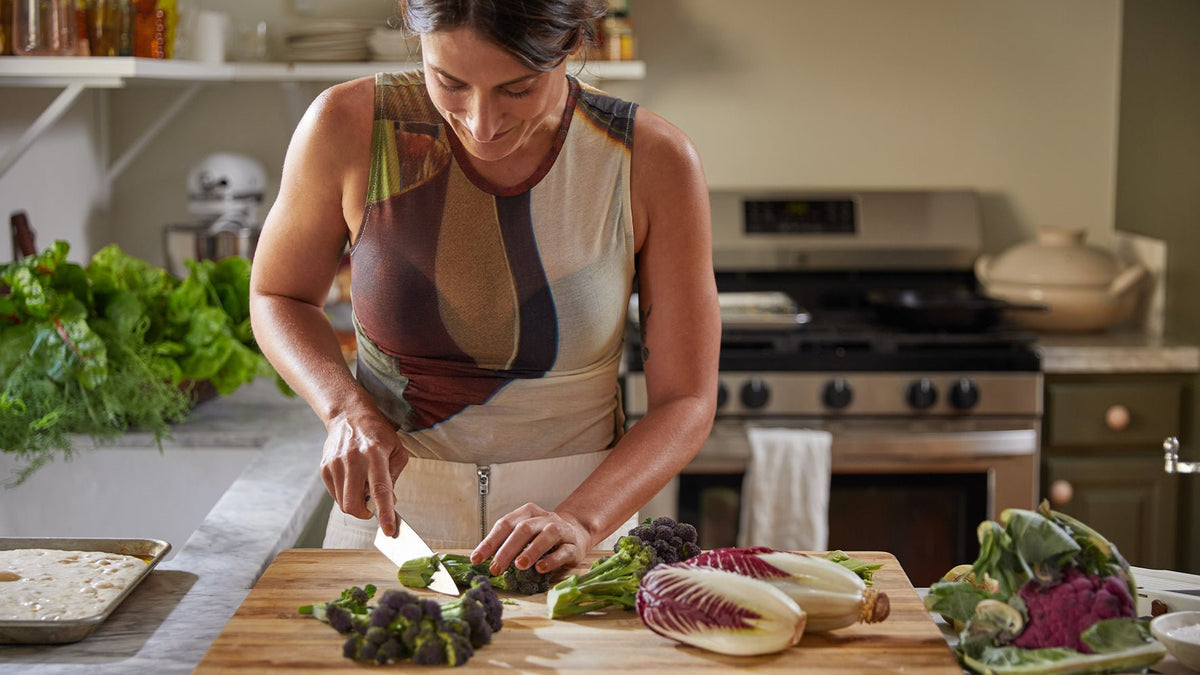
Pruning a Farmstand gives you so much plant material, so I started playing with it. I made a tomato leaf focaccia: you steep the leaves like a tea and use that water for the flavor, rather than eating the leaves themselves. Pepper plant leaves are edible too. It's just about finding ways to use what's already growing so nothing goes to waste.
Editor's note: Tomato leaves and other nightshade greens contain naturally occurring glycoalkaloids like tomatine and solanine, which can cause stomach upset in larger amounts. Hetal's approach of steeping small quantities for flavor rather than eating the leaves keeps use modest, but do your own research before cooking with plant parts you haven't tried, and skip them entirely if you're unsure.
6. Your daughter grew up alongside your Farmstand. What's her role in the garden?
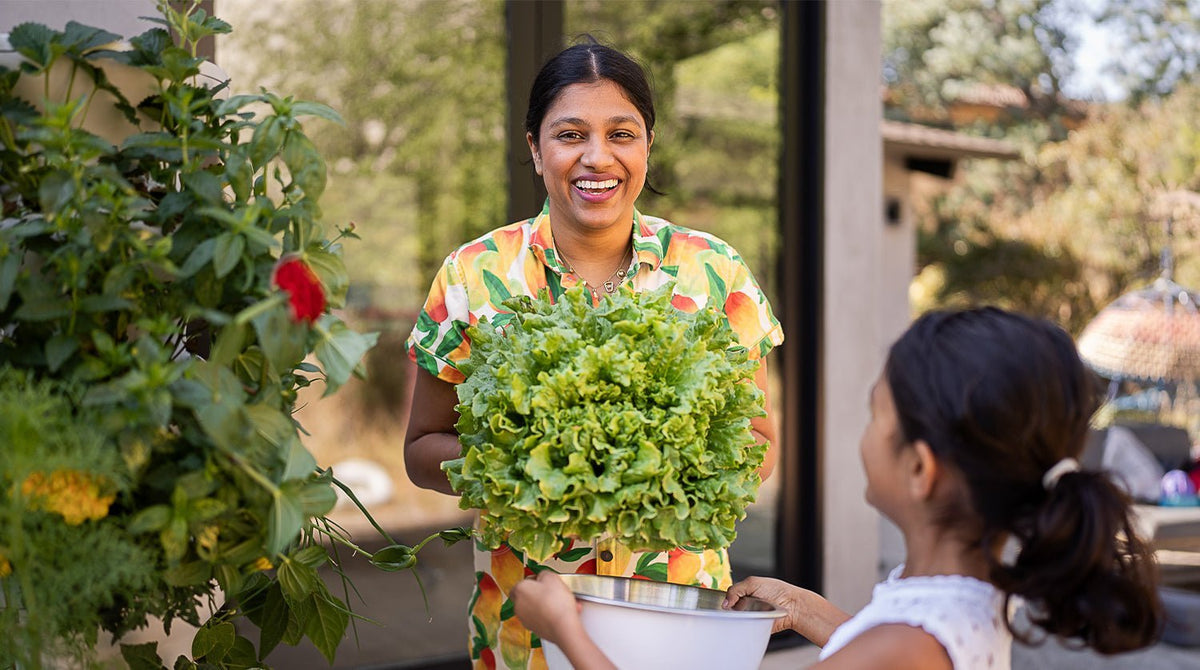
She loves the tomatoes, and she actually really loved the chickpeas. Just recently she ran outside, picked mint off the Farmstand, and we made strawberry mint iced tea together. Watching her eat cherry tomatoes off the plant with zero hesitation reminds me so much of myself as a kid.
7. Your desserts are known for edible flowers. Which ones earn a spot on your Farmstand?
I grow a lot of them. This year it was sweet alyssum, marigolds, zinnias, and blanket flowers, and I've done violas in the past. The alyssum is beautiful because it cascades like a little waterfall if you plant it toward the bottom. I did a whole post years ago on preserving edible flowers by pressing them in a book.
8. You recently finished your Master Gardener certification. Did anything from the program change how you think about hydroponic growing?
I did the program through the University of California's agriculture and natural resources department, four months of soil health, plant health, pests, succession gardening, all of it. Hydroponics never came up, so I ended up giving a whole presentation on it. We're always talking about water-wise gardening, and this is water-wise gardening. If you have sandy soil, like huge parts of San Francisco built on sand dunes, you'll waste so much water trying to keep plants happy in the ground. In those cases I'd genuinely recommend a Farmstand over buying amendment after amendment every season.
9. Any hard-won lessons for the rest of us?
The mint. The mint went crazy. I let it grow too long, and when I went to reset the Farmstand it took me two hours and a pair of shears to get it out, because it had gone woody and was sending runners into other cups. So when the harvest-by date says harvest, believe it. The other things people forget: change your watering timer when the seasons change so you don't waterlog your plants, and keep up with feeding. And harvest your lettuces from the base so they keep producing. You don't need to pull the whole plant.
10. Someone just set up their very first Farmstand. What should they plant, and what's next for you?
Lettuces, no question. They're fast, they're satisfying, and they'll teach you the rhythm of the whole thing. Just don't plant too many at once or you'll be drowning in lettuce. As for me, I'm working on my third book proposal, all easy weeknight Indian dinners, and I'm going to keep pushing what the Farmstand can do with South Asian heritage produce: sesame seeds and an Indian tomato variety called Kachin are next on my list. And truly, if anyone has questions, DM me. I evangelize this thing constantly.
Want to trade experiments, wins, and "what do I do with 20 serranos" questions with growers like Hetal? Come join the conversation in the Community Garden.