
Q&A: Come Back to Your Senses
A conversation with Cynthia Husband (@Sacred_Cyn) In celebration of Mental Health Awareness Month
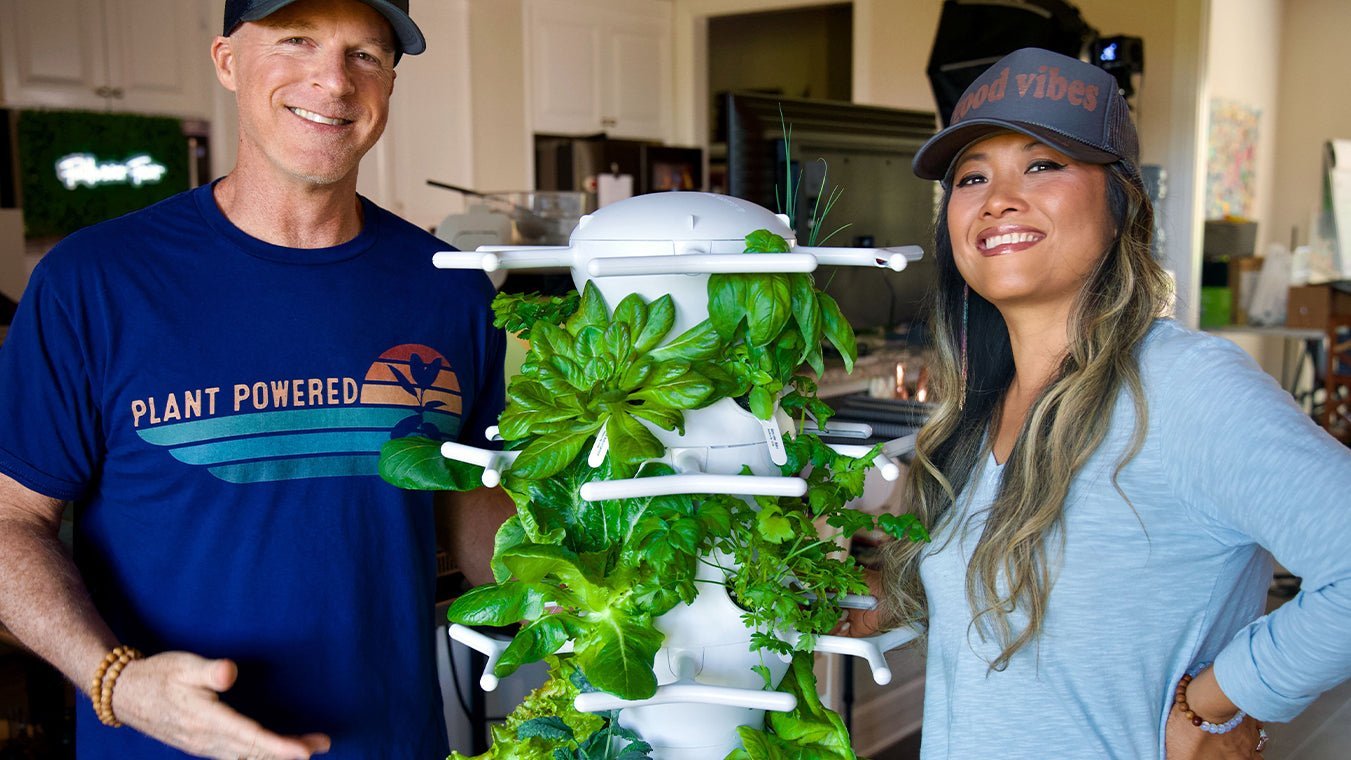
"Our environment is constantly communicating with our nervous system. Light, sound, clutter, color — our body is taking it in, often before we've really even thought about it. When a space feels calm and intentional, it becomes easier to exhale and come back to ourselves. Small grounding shifts can be simple: opening a window, letting in natural light, or adding something living — like a plant or herbs in the kitchen."
We sat down with California-licensed Marriage and Family Therapist Cynthia Husband to talk about ritual, presence, and what it means to nourish yourself with intention.
You mentioned that having fresh herbs and greens within arm's reach has been more impactful than you expected. Can you tell us about that?
It's changed my rhythm in small but meaningful ways. Having fresh herbs and greens within arm's reach makes nourishment feel effortless — like it's woven into my day instead of something I have to plan perfectly. I'll pause between tasks to snip a little basil or add greens to a meal, and that tiny pause becomes a reset.
It's also shifted how I move through my mornings. I notice myself slowing down, reaching for something living, and feeling a quiet sense of satisfaction knowing I'm feeding myself with intention. Even the act of harvesting becomes a moment of presence. Care can be simple, and it can be right here.
You’re a therapist whose work centers on emotional well-being and self-connection. What first drew you to this path?
I’ve always been drawn to the inner world– what people carry, what they hide, and what they’re longing to return to. I noticed how much pain can live quietly inside someone, and how powerful it is when a person feels truly seen and safe.
This work, to me, is about helping people come home to themselves — rebuilding self-trust, reconnecting with their voice and their needs, with compassion and without shame.
You often speak about creating space to feel and process. How does growing or preparing food fit into that practice for you?
Growing and preparing food is one of the most practical ways I create space to feel and process because it brings me back into my body. When I’m moving too fast, my mind can start living in the future. But food asks me to return to the present: washing greens, chopping slowly, smelling herbs, watching something grow over time.
That pace is regulating. It softens my nervous system and creates a gentle container where emotions can rise without me needing to force anything. I don’t have to “fix” what I’m feeling. I can just be with it, while my hands are doing something caring. In that way, nourishment becomes a ritual. It’s not just about eating; it’s about returning to myself.
What shifts, even subtly, when you're tending to something living or harvesting your own ingredients?
Everything slows down. When I'm tending to something living — watering, checking leaves, harvesting — my body shifts out of doing and into being. It's one of the few moments where I notice my shoulders drop, my jaw unclench, and I take a deeper breath than I realized I'd taken all day.
It’s the opposite of the constant push of the day–the emails, the schedules, the mental tabs we keep open. Plants don’t respond to rushing. They respond to consistency, presence, and care. And when I step into that rhythm, my nervous system remembers: I don’t have to sprint to be worthy.
How do sensory experiences — touch, smell, taste — help bring people back to the present moment?
Sensory experiences are some of the quickest, gentlest ways to anchor us, because the body can ground us when the mind feels flooded. With elementary school students, I teach this in simple language: "Let's come back to our five senses." We might press our feet into the floor, notice the texture of something in our hands, or pause to smell something calming. When someone is overwhelmed, those cues help the body feel safer — and from that safer place, we can process what's happening instead of being swept away by it.
I love sensory grounding because it's accessible. It doesn't require the perfect words. And the simplest place to start? Breath. Sit down, place one hand on your chest and one on your belly, and take ten slow breaths — inhale for 5, hold for 5, exhale for 7. You don't have to do it perfectly, just intentionally. It signals safety to your body and brings you back to the present. The best part? You already have everything you need.
How does the environment we’re in shape our emotional state, and what are small ways we can make it feel more grounding?
Our environment is constantly communicating with our nervous system. Light, sound, clutter, color — our body is taking it in, often before we’ve really even thought about it. When a space feels noisy or chaotic, it can keep us in a subtle state of alert. When a space feels calm and intentional, it becomes easier to exhale and come back to ourselves.
Small grounding shifts can be simple: opening a window for fresh air, letting in natural light, clearing one small surface, lighting a candle, playing calming music, or adding something living, like a plant or herbs in the kitchen. You can even create a small “calm corner” – a spot where your body can land. It doesn’t have to be perfect, it just has to feel like you can breathe there.